By Shannon Riley | Brooklyn, NY
The All Good Green Check Promise To Our Community
There’s a process happening across the legal cannabis supply chain that most brands do not mention on their packaging, their menus, or their websites. It’s called remediation — specifically, irradiation — and it is being applied to cannabis flower at an alarming rate, often with no disclosure to the consumer whatsoever.
In fact, almost every major brand on the New York market right now is using remediaton, most consumers don’t even understand what it is.
At All Good Cannabis, we named ourselves that for a reason. All Good is a standard. Every product we carry has to pass what we call the All Good Green Check — four commitments to the plant, to the grower, and to you. Remediation fails every single one of them. So let’s talk about what it actually is and why you won’t ever find a remediated Cannabis product at All Good.
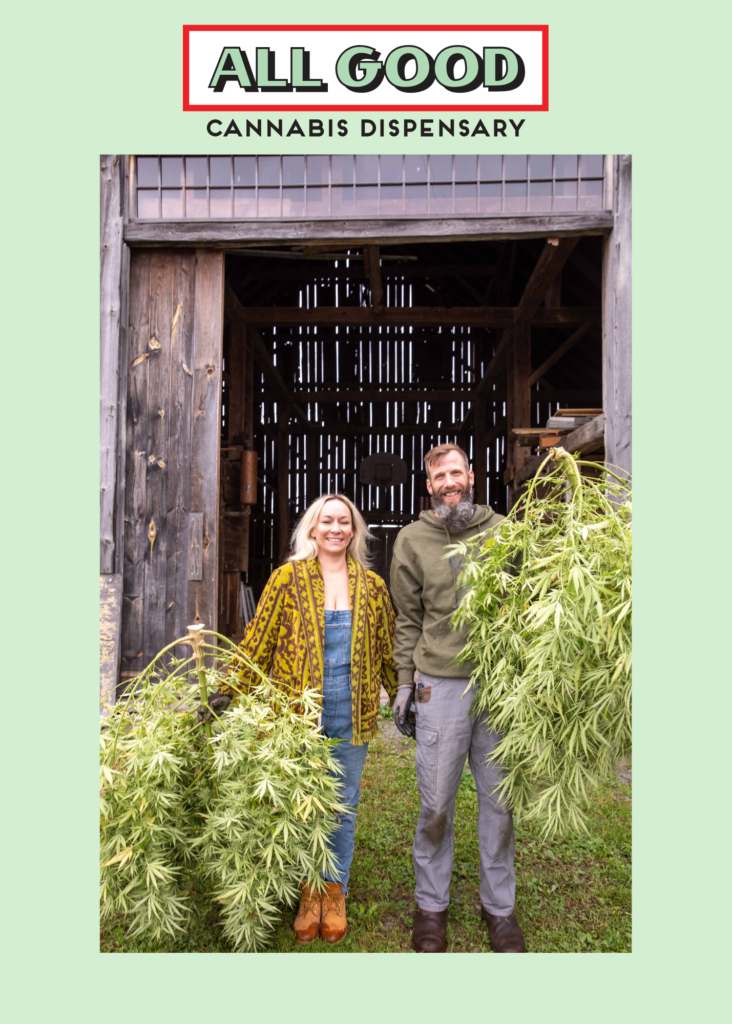
All Good’s commitment to customer education is why we keep an All Good Green Check Promise to never carry Cannabis that is anything but the purest and most honestly grown. The more you know about what you’re smoking, the more informed decisions our community can make about how and what we ingest.
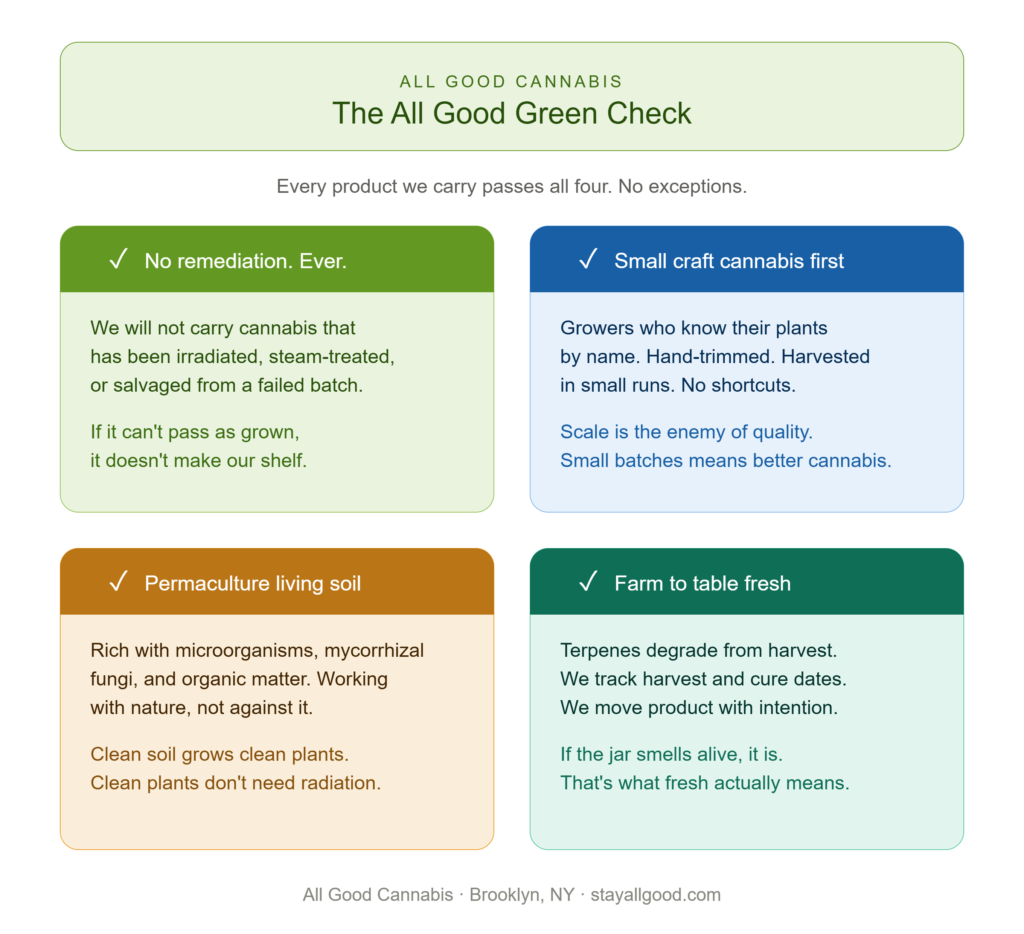
✅ The All Good Green Check: Our Four Commitments to Good Plants
When we say All Good, we mean it. And in an industry where most dispensaries genuinely cannot tell you whether the product on their shelf was irradiated — because no one told them, because nothing on the label says so, because the system doesn’t require it — being able to make a clear, unconditional guarantee matters enormously.
At All Good, you are guaranteed a plant that has not been remediated.
That’s a sourcing commitment we make before anything hits our shelves.
That guarantee is built on four non-negotiable standards — what we call the All Good Green Check. Together, they represent what legal cannabis in New York should look like. Most of the industry isn’t there yet. We are.
✅ 1. No Remediation. Ever.
This is the one we built the other three around. We will not carry cannabis that has been remediated — period, full stop, no exceptions. Not irradiated product.
If a product can’t pass testing as grown, it doesn’t belong in a jar in our store. We work with cultivators who share that standard, who absorb the loss when something doesn’t meet the mark, and who understand that their reputation — and ours — depends on never taking the shortcut.
✅ 2. Small Craft Cannabis First
Scale is the enemy of quality in cannabis. When a cultivation operation reaches a certain size, individual plants stop mattering. Harvests are timed to logistics, not maturity. Curing is rushed because square footage has a dollar cost. Quality control becomes statistical rather than personal.
We prioritize small craft cultivators — growers who know their plants by name, who hand-trim, who harvest in small runs, who are present for every stage from seed to cure. These are the growers who notice when something is off and fix it instead of hiding it. Their batches are smaller, their availability is limited, and their cannabis is categorically better.
When you shop All Good, you’re buying from someone who genuinely cares what ends up in your hands.
Permaculture Living Soil
The foundation of clean, healthy cannabis is what it grows in. Synthetic nutrients can push impressive numbers on a lab report, but they don’t build a resilient plant — and a plant that isn’t resilient is a plant that’s vulnerable to the exact kind of microbial pressures that lead to remediation.
Living soil — rich with beneficial microorganisms, mycorrhizal fungi, worm castings, and organic matter — creates a self-regulating biological ecosystem around the root zone. The plant feeds itself the way nature intended, developing deep terpene expression, robust cannabinoid profiles, and natural resistance to pathogens.
Permaculture takes this further. It’s an approach to cultivation rooted in working with natural systems rather than against them — building soil health over time, reducing inputs, closing nutrient loops, and producing cannabis that is an expression of its environment rather than a product engineered around it.
Clean soil grows clean plants. Clean plants don’t need radiation to be safe.
✅ 3. Farm to Table Fresh
Cannabis, like produce, has a freshness window. Terpenes — the compounds responsible for aroma, flavor, and much of the effect — begin degrading from the moment of harvest. Heat, light, time, and improper storage all accelerate that degradation. By the time cannabis has traveled through a multi-state distribution network, sat in a warehouse, and been processed through multiple hands, it may be months or more removed from its peak.
We treat cannabis the way a good restaurant treats its ingredients: we care about provenance, and we care about freshness. We track harvest and cure dates. We ask our cultivators when the batch was processed and how it’s been stored. We move product with intention, not just volume.
When you open a jar from All Good, the smell that hits you — complex, layered, alive — is the smell of cannabis that hasn’t been sitting on a shelf since before you started thinking about buying it.
That’s farm to table. That’s what fresh actually means.
What You Can Do as a Consumer
- Ask your dispensary directly: “Was this product remediated? Was it irradiated?” Watch what happens. If they can answer with certainty — and explain how they know — that’s a good sign. If they look confused, guess, or deflect, you have your answer about how seriously they take sourcing.
- Look at the COA. A Certificate of Analysis showing retesting after a failed initial test is a red flag worth pressing on.
- Trust your nose. Fresh cannabis with an intact terpene profile has a complex, alive smell. Flat, hay-like, or “gym bag” flower is a warning sign that something has been compromised — irradiation, poor curing, or age.
- Ask when it was harvested. A dispensary that knows the harvest date is a dispensary that has actually talked to their cultivator.
- Demand disclosure legislation. New York should require remediation disclosure on cannabis packaging, the same way the federal government requires it on irradiated food. If you agree, say so — to your dispensary, to your community board, and to your state representatives.
What Is Cannabis Remediation?
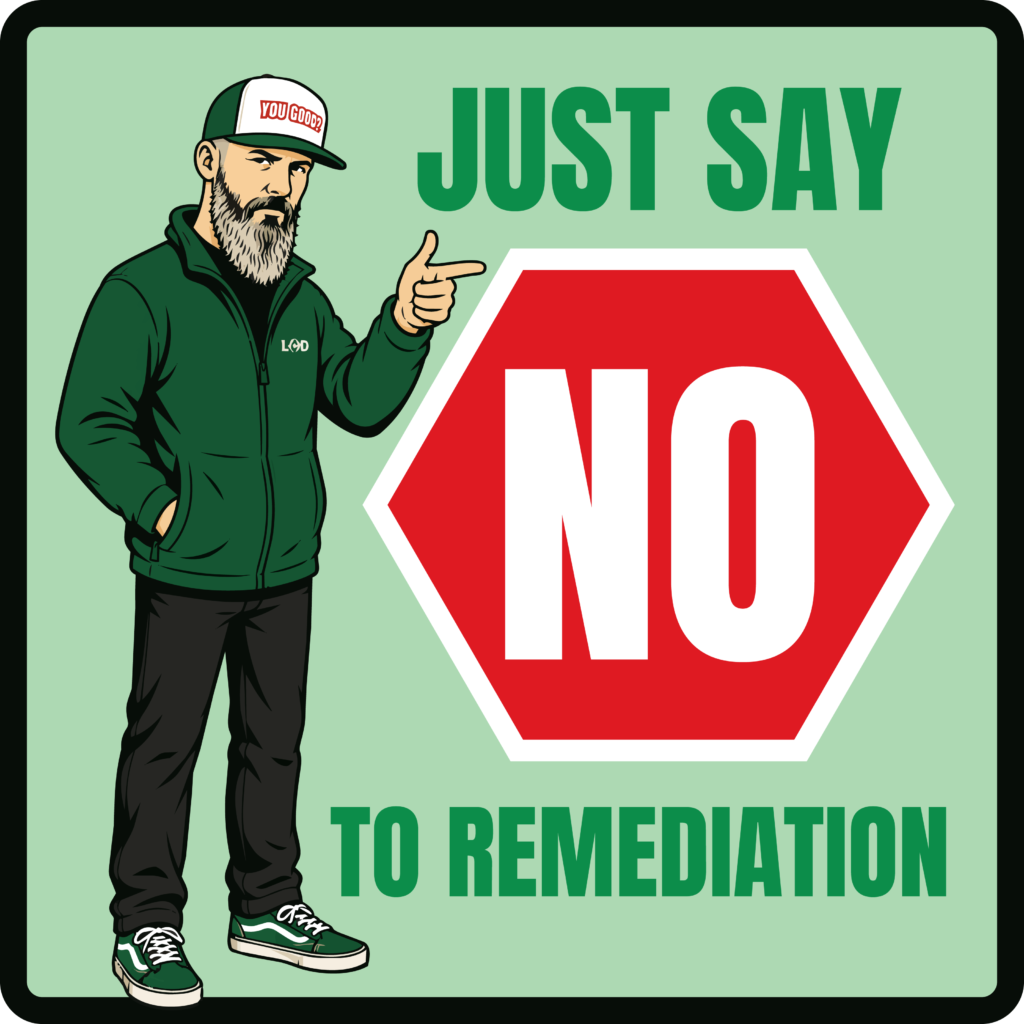
Remediation is the process of exposing cannabis flower to ionizing radiation — gamma rays, X-rays, or electron beam (e-beam) — to kill microbial contamination. The machines used are industrial-grade: the same technology used to sterilize medical equipment and extend the shelf life of packaged meat. Radiation passes through the flower, pathogens are destroyed, the batch retests clean, and it ships to a dispensary shelf near you.
What you are actually buying when you purchase irradiated cannabis is flower that was grown, harvested, and then found — or suspected — to contain mold, yeast, bacteria, or other microbial contamination. The radiation kills the mold. But it does not remove it. The dead mold spores remain in the flower. You are still smoking the remnants of a contaminated plant — one that has simply been sterilized rather than discarded.
What most consumers don’t realize is that most NY brands don’t wait for a batch to fail — they irradiate everything, preemptively, as a standard production step. Healthy flower. Clean flower. Flower that never needed any intervention. Irradiated anyway, as an insurance policy against a failed test. It tests clean, it ships, and you buy it with no idea any of this happened — because in New York, nothing on the label has to tell you.
In the cannabis industry, remediation refers to any post-harvest process used to bring a batch of cannabis into regulatory compliance after it has already failed testing. The most common reason a batch fails: microbial contamination — things like mold, yeast, E. coli, Salmonella, or Aspergillus — pathogens that can thrive in improperly cured, stored, or transported flower.
When a batch fails, a cultivator has two options:
- Destroy it. Take the financial loss and move on.
- Remediate it. Subject the failed product to a process that kills the contamination — retest it, repackage it, and sell it.
Remediation is legal in New York and most cannabis markets. Some remediation methods, like autoclave steam treatment, are relatively benign. But one method dominates the industry because of its speed, cost-efficiency, and scalability:
Ionizing radiation — commonly called irradiation.
Here’s something most New York cannabis consumers don’t know: New York State does not require cannabis packaging to disclose whether a product has been remediated or irradiated. Not a word. Not a symbol. Nothing on the label. Other states — including California, Colorado, and Michigan — have moved toward mandatory remediation disclosure, recognizing that consumers have a basic right to know when a product has been through post-harvest intervention. Even the federal government requires irradiated food to carry a disclosure symbol.
But in New York’s legal cannabis market, a jar of flower that started its life as a contaminated, failed batch — blasted with gamma radiation, retested, and repackaged — looks identical on the shelf to cannabis that was grown cleanly and never touched by a radiation chamber. Most dispensaries don’t even know to tell you, because no one in the supply chain told them. At All Good, we believe New York must require remediation disclosure on every cannabis label — and until it does, we’re making you the guarantee ourselves
NOTHING in our store has ever been remediated. Period.
What Is Irradiation, Exactly?
Irradiation exposes cannabis flower to high doses of gamma rays (typically from Cobalt-60), X-rays, or electron beam (e-beam) radiation. The process is effective at killing microbial life — including mold and bacteria — by disrupting the DNA of pathogens.
The cannabis itself is not made “radioactive” in the way people fear. But what irradiation does do is something the industry is far less forthcoming about:
- It degrades cannabinoids. Research has documented measurable reductions in THC, CBD, and other cannabinoids following irradiation. THC can degrade into CBN (cannabinol), fundamentally altering the effect profile of the product.
- It destroys terpenes. The volatile aromatic compounds responsible for flavor, aroma, and much of the therapeutic nuance of cannabis are among the most fragile molecules in the plant. Irradiated flower often smells flat, hay-like, or simply “off.”
- It alters the physical structure of the flower. Irradiation degrades chlorophyll, affects moisture content, and changes the visual and tactile characteristics of the bud.
- It does nothing to fix the root cause. Irradiation is a cover-up, not a correction. The cultivation or storage failure that allowed contamination in the first place goes entirely unaddressed.
The Labeling Problem: New York Is Leaving Consumers in the Dark
Here is the part that should concern every cannabis consumer in New York — and frankly, should embarrass the state’s regulators:
New York does not require cannabis packaging to disclose whether a product has been remediated or irradiated. Not a word. Not a symbol. Nothing.
This is not the national standard. Several other states have moved toward mandatory remediation disclosure on cannabis labels, recognizing that consumers have a basic right to know when a product has undergone post-harvest intervention. California, Colorado, and Michigan have each grappled with remediation disclosure requirements in ways New York has not. When you buy cannabis in those markets, you may see a notation — however small — that alerts you to the product’s history. In New York, that information simply does not have to appear.
In the food industry, the federal government figured this out decades ago. Irradiated food products are required under 21 CFR Part 179 to carry the Radura symbol — an internationally recognized green icon — along with a written disclosure. Irradiated strawberries have to tell you. Irradiated spices have to tell you. Irradiated cannabis flower, sold in a state-licensed dispensary in New York, does not have to tell you anything.
That is a policy failure. And All Good Cannabis believes it needs to change. New York’s OCM should require clear, prominent disclosure on every cannabis product that has been remediated — what method was used, and why. Consumers in this state deserve the same basic transparency that shoppers in a grocery store already have.
Most Dispensaries Can’t Even Answer the Question
Here is something that will surprise you: the majority of dispensary staff in New York have no idea whether the products they’re selling have been remediated.
This isn’t a knock on budtenders. It’s a structural problem. When remediation isn’t required to appear on the label, it often isn’t communicated anywhere in the supply chain — not from the cultivator to the distributor, not from the distributor to the retailer, and not from the retailer to you. The information simply disappears. Ask most dispensaries whether a specific product was irradiated, and you will get a blank stare, a guess, or a confident-sounding non-answer.
We have asked those questions. We have seen what happens when you push. In many cases, the honest answer is: nobody in the retail chain actually knows unless they check the COA.
Why Does This Keep Happening?
Simple economics. Legal cannabis cultivation is expensive. A large contaminated batch represents tens or hundreds of thousands of dollars in potential losses. Irradiation services are commercially available, affordable, and fast. The regulatory pathway to refile a remediated batch for retesting exists in New York, and without a labeling requirement to expose it, there is almost no market penalty for using it.
When margins are tight and competition is fierce, the incentive to salvage failed product rather than destroy it is enormous — especially when the consumer will never know.
The Real Question: How Do You Prevent Contamination in the First Place?
You prevent it by growing the plant correctly from the start. That’s why All Good works with the farms we do, they know how to grow a plant without needing remediation measures.
Microbial contamination doesn’t happen in a vacuum. It happens when cannabis is pushed through industrial-scale production, grown in synthetic media under artificial inputs, harvested on a financial calendar instead of a plant calendar, and rushed through drying and curing to hit a shelf date. Cut corners early, and you pay for it later — either by destroying the batch or irradiating it.
The antidote isn’t a radiation chamber. It’s a philosophy of growing that puts the plant first. Which brings us to the All Good Green Check.
All Good Means All Good
We Promise:
The certainty that every product in our store passed the All Good Green Check — grown clean, grown small, grown in living soil, and fresh enough to prove it.
No radiation. No cover-ups. No shortcuts.
Just good plants, handled with respect, from growers who mean it.
That’s what All Good means.
All Good Cannabis is Brooklyn’s small-batch dispensary committed to quality, transparency, and community. Questions about our sourcing? Ask us — we actually love talking about this stuff.
© 2026 All Good Cannabis / Rockaway Moonshot LLC. All rights reserved.